
Giuseppe Biasi
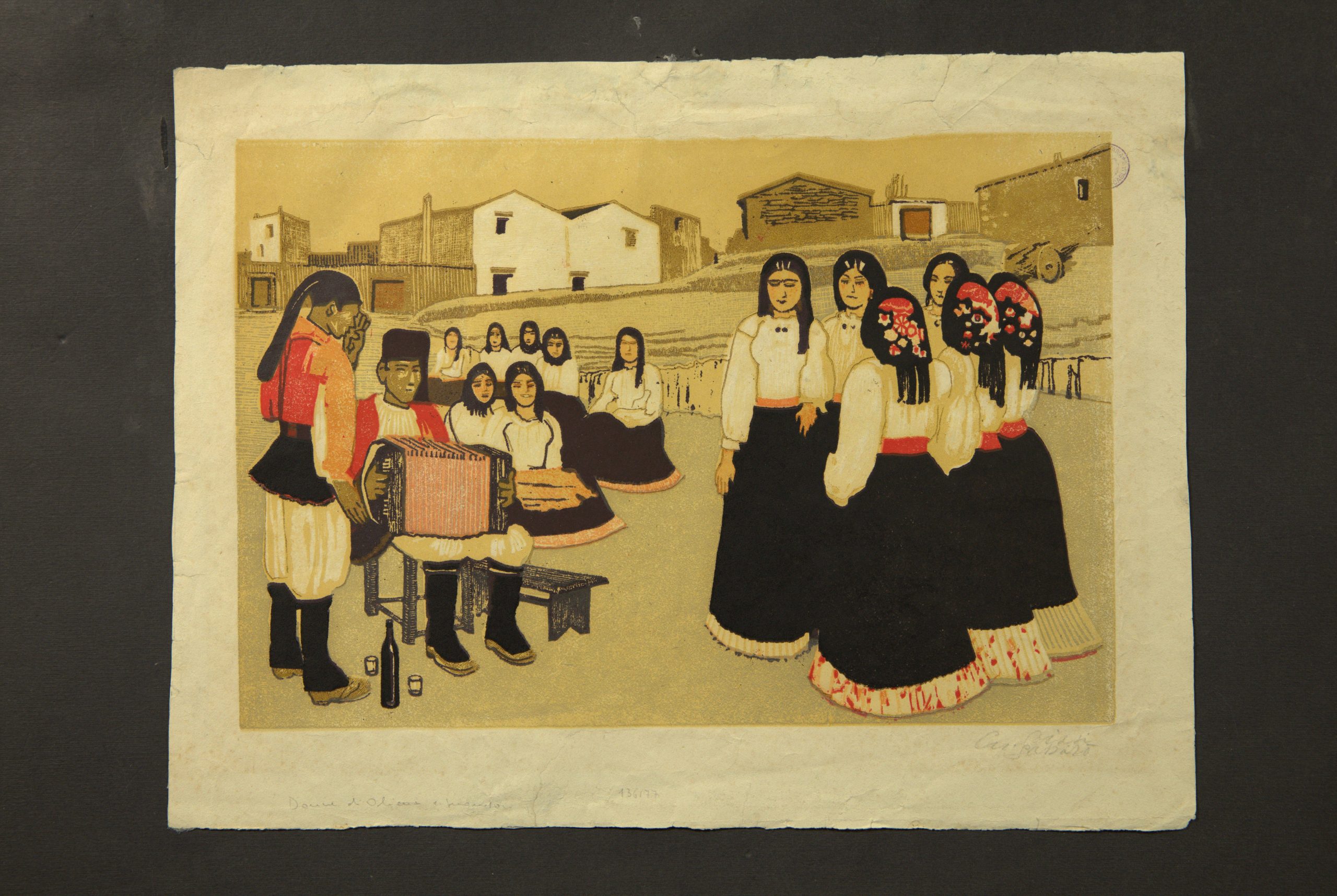
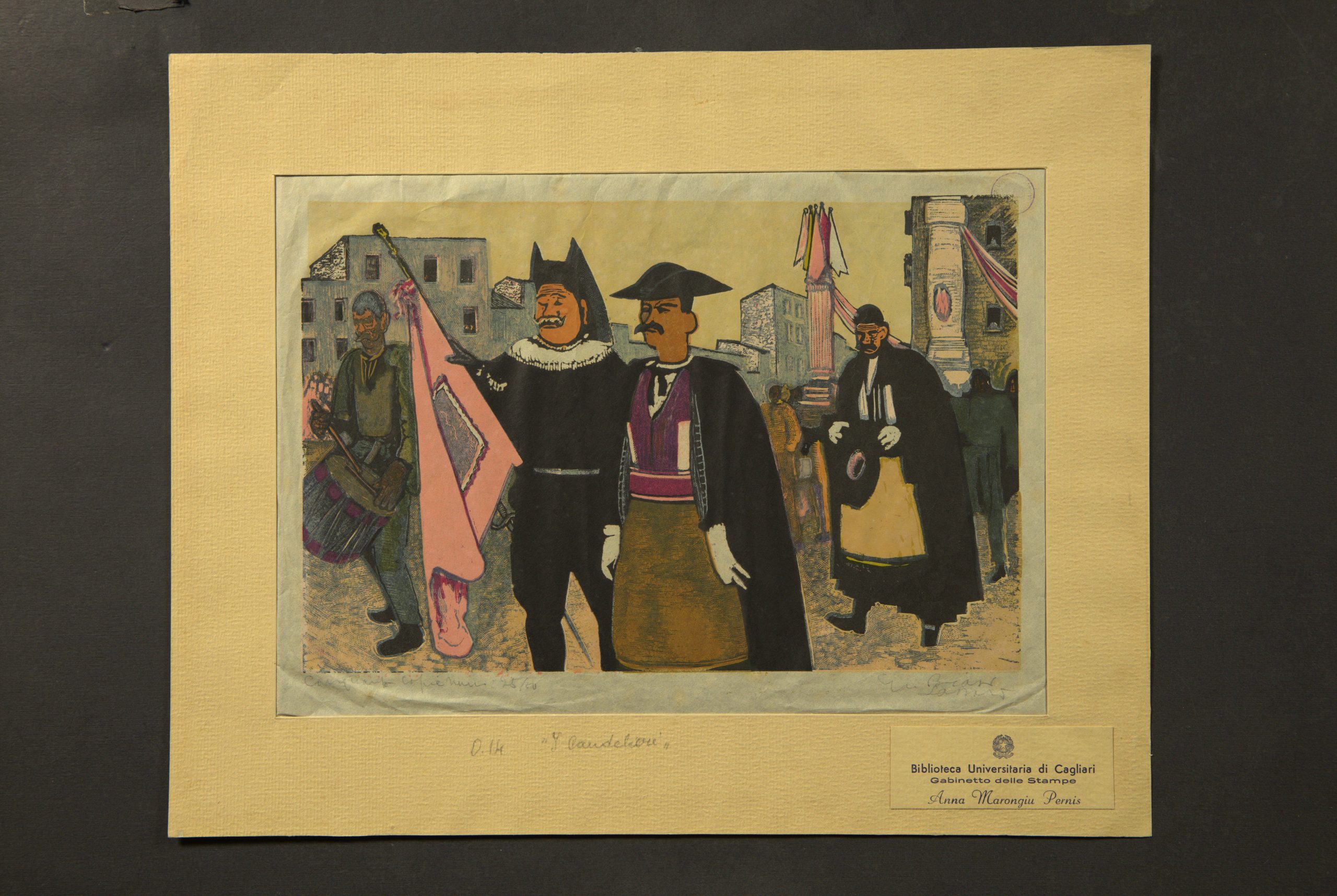
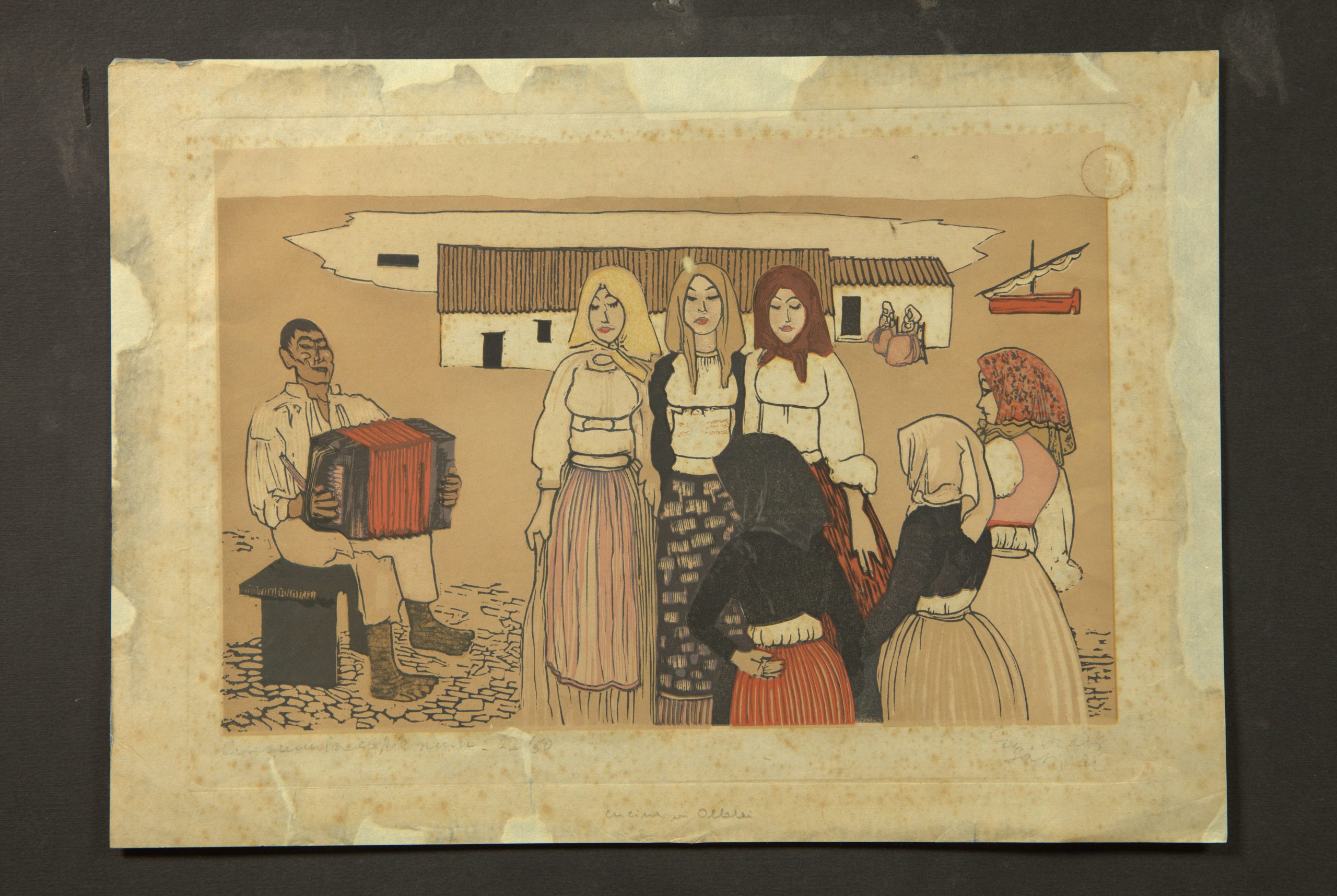
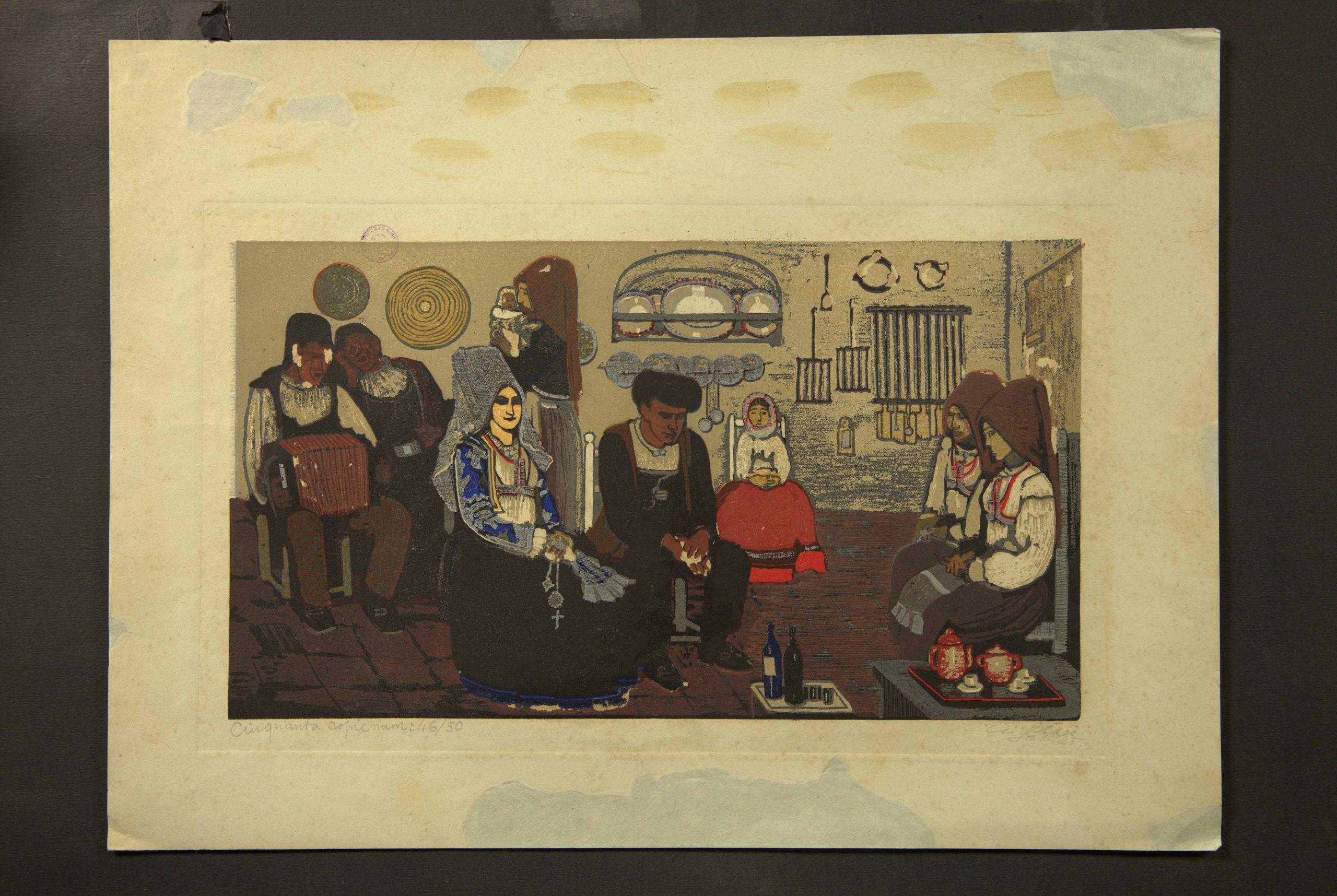
Giuseppe Biasi (Sassari, 1885 – Andorno Micca, 1945) was one of the most important Sardinian artists of the 20th century. His engravings and graphic works, created primarily in the 1910s and 1920s, reflect a deep interest in the rural world, human figures, and processions, rendered in a highly distinctive narrative and decorative style.
Between 1917 and 1918, he undertook an important collaboration with Grazia Deledda, illustrating L’Incendio nell’Uliveto in forty plates.
From this point onward, he participated in a series of nationally significant exhibitions, culminating in his participation in 1931 at the first Colonial Art Exhibition in Rome, where he exhibited a series of exotic-style paintings, the result of a trip he had taken several years earlier, in 1924, to North Africa.
In the 1930s, he returned to Sardinia: his return to his native land would serve as inspiration for a series of paintings depicting the appearance and traditions of the villages in the Sardinian hinterland.
In the midst of the war, in 1942, he left the island and moved to Biella in search of better pay. He would never see Sardinian soil again, as he died in 1945 near Biella, murdered by partisans after being accused of being a German spy.
The University Library of Cagliari also holds a significant portion of his graphic works.